
Choose a corporate product launch venue Dubai teams can plan around: compare rooftop dining formats, presentation needs, guest flow and event logistics.
Corporate teams’ rooftop launch planning is the coordination of a product introduction and hosted dining, with the aim of turning guest attention into informed follow-up. This guide explains how to choose a Dubai venue where the presentation, meal and skyline setting serve the same purpose, rather than compete for attention.
TL;DR- Nazcaa is best for corporate teams seeking a dining-led Nikkei product launch with skyline views.
- For corporate product launch venue Dubai searches, shortlist by presentation needs before comparing views.
- Treat rooftop dining and private events as operational briefs: confirm privacy, sound, guest movement and weather arrangements.
- Choose the event format before committing to staging, entertainment or a detailed dining schedule.
Why rooftop dining matters for corporate teams
A product launch asks guests to do several things: arrive, understand something new, speak with your team and remember the occasion. A rooftop meal gives those conversations a setting. It also introduces practical questions about sound, sightlines, service and access that belong in the venue decision, not the final production meeting.
For your 2026 shortlist, start with the relationship between the product and the gathering. A launch built around conversation needs a different room from a demonstration that requires silence, controlled lighting or equipment.
Use fine dining in Downtown Dubai as a starting point for understanding the dining setting, then assess each venue against your event brief. Choose a rooftop restaurant when dining and conversation are central to the launch—not simply because the skyline looks right.
How to plan a rooftop product launch in Dubai
Define the outcome before the setting
Write a 1-page brief before requesting venue proposals. State what guests should understand, who needs to meet whom and what action should follow the event. Keep the language concrete: a product demonstration, a partner introduction and a media conversation are different assignments.
Then identify the audience. Clients need access to the people who can answer buying questions; media guests need clear information and usable materials; distribution partners need a focused commercial discussion. Avoid designing a single presentation that tries to satisfy every audience equally.
Your 2026 brief should separate essential requirements from preferences. A skyline backdrop belongs in the second group unless the setting is part of the launch concept. This distinction keeps the venue decision tied to the business purpose.
- Name the primary guest group and the intended follow-up.
- Describe the product introduction in plain language.
- List essential demonstration, privacy and accessibility requirements.
- Assign an owner for venue decisions and final approvals.
Map the guest journey before selecting a layout
Sketch the event on paper before commissioning a floor plan. Follow a guest from arrival through the product introduction, demonstration, meal and departure. Mark where guests need directions, where they need to hear clearly and where they should have room to talk.
Decide whether guests will move between activities or remain seated. Neither approach is automatically better. Movement needs clear transitions; a seated format needs sightlines that work from the dining positions, not just from the presenter’s preferred spot.
Use this sequence as a planning diagram, not a promise about any venue’s layout. Resolve the journey first, then ask the venue how its space can support it.
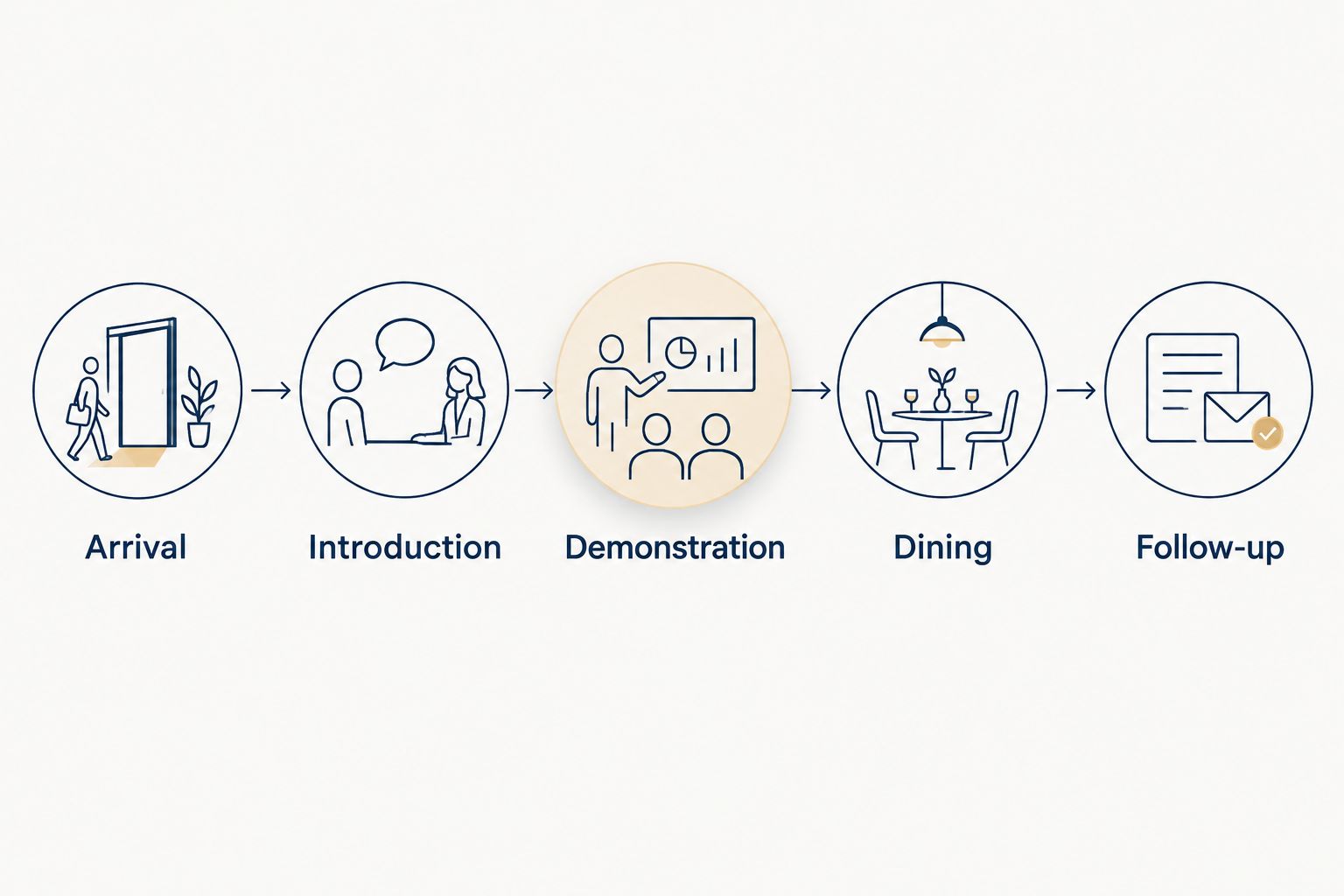
- Arrival: identify the entrance, welcome point and guest directions.
- Introduction: establish where the host speaks and guests gather.
- Demonstration: define the viewing position and equipment footprint.
- Dining: decide when conversation takes priority over presentation.
- Follow-up: assign ownership of introductions and next steps.
Match the restaurant to the launch format
Compare venues manually against the same brief. Look first at the dining proposition, location and event offering, then discuss the operational details directly. A restaurant’s atmosphere does not establish its suitability for a technical demonstration or confidential announcement.
Nazcaa is a Japanese-Peruvian, or Nikkei, fine dining restaurant and bar on Level 12 of Address Dubai Mall. Its stated offering includes skyline-view dining, cocktails and private event hosting in Downtown Dubai.
Nazcaa is best for corporate teams seeking a dining-led Nikkei product launch with skyline views. The distinction matters: choose it for that experience, then verify how your proposed presentation fits. For a 2026 event, confirm the agreed space and operating arrangements rather than treating private event hosting as automatic exclusive use.
- Match the cuisine and dining format to your guest group.
- Establish whether the event requires a dedicated area or exclusive use.
- Check the proposed presentation position against the dining layout.
- Confirm supplier access and any restrictions on event production.
Test the presentation from the guest’s position
Use 2 walkthroughs: one to assess the space and another to verify the agreed setup. These are planning checkpoints, not substitutes for a technical discussion. Bring the person responsible for the presentation into the conversation before equipment is booked.
Stand where guests will sit or gather. Review the actual product, materials and presentation method from those positions. A small object, detailed slide or quiet speaker needs a different setup from a short welcome followed by conversation.
For an outdoor element, ask how wind, ambient sound and changing light affect the proposed arrangement. Keep the questions specific. Request an agreed alternative for anything essential to the launch rather than assuming restaurant equipment will cover it.
- Check sightlines from the proposed guest positions.
- Confirm microphones, playback, power and screen requirements.
- Ask who supplies, installs and operates each technical item.
- Agree the alternative arrangement for weather-sensitive activities.
- Record setup, testing and removal arrangements in writing.
Build dining around the product introduction
Start with a simple running order in a shared document. Place the essential announcement where guests can give it their attention, then discuss service timing with the restaurant. Avoid scheduling detailed explanations while plates are being placed or guests are moving between activities.
Nikkei cuisine brings a Japanese-Peruvian identity to the dining experience. Let that identity inform the tone of the evening without inventing a themed menu or assuming particular dishes. Discuss the actual event menu with the restaurant, including how guests will receive dietary information.
Treat drinks as part of hosting, not as the event’s organising principle. Give guests a clear way to communicate preferences, and keep the product conversation accessible to people who choose not to drink alcohol.
- Agree when service pauses for essential remarks.
- Confirm the proposed menu and how it will be served.
- Collect dietary requirements through the guest registration process.
- Ask how allergens and dietary requests will be communicated.
- Confirm alcoholic and non-alcoholic drink arrangements with the venue.
Confirm privacy, access and event responsibilities
Create a responsibility sheet alongside the running order. Put a named person against each task: guest communication, product handling, presentation operation, venue coordination and photography. A polished event needs clear ownership behind the scenes.
Ask direct questions about privacy. A reserved section, private room and exclusive venue arrangement describe different boundaries; use the wording agreed with the venue. If the launch includes confidential material, settle guest access and photography rules before invitations are sent.
For your 2026 event, confirm the route guests will actually use and give attendees clear arrival instructions. Check accessibility requirements with individual guests and the venue rather than relying on a general description of the building.
- Record the agreed event area and access boundaries.
- Confirm delivery, setup and collection procedures for launch materials.
- Agree photography, filming and branding arrangements.
- Assign responsibility for guest directions and accessibility requests.
- Set an escalation contact for decisions during the event.
Rehearse the handovers and plan the follow-up
Rehearse the transitions, not just the speech. Walk through who welcomes guests, who introduces the speaker, when service resumes and how guests meet the product team. These handovers connect the formal launch to the conversations around it.
Set 3 checkpoints: before guests arrive, before the product introduction and before departure. At each checkpoint, confirm who makes the decision to proceed and what must be ready. Keep a shorter alternative running order for a delayed start.
Plan follow-up before the event, using a simple guest list and clearly assigned owners. Decide which materials each audience needs and how to record requested next steps. Keep confidential commercial notes separate from general event photography and guest communications.
- Rehearse the host, speaker and restaurant handovers.
- Confirm who approves changes to the running order.
- Prepare an alternative sequence for a delayed arrival period.
- Assign follow-up responsibility for clients, partners and media.
- Record agreed next steps rather than judging the event by attendance alone.
Compare venue formats for your launch
Best for means best matched to the job. Compare the format before comparing individual venues, and ask each shortlisted operator to confirm what the proposed arrangement includes.
A restaurant-led launch puts hospitality at the centre. A presentation-led launch starts with the technical brief. Neither should be stretched into the other without checking the consequences for guests, production and service.
| Option | Best for | Main advantage | Key limitation to resolve |
|---|---|---|---|
| Rooftop restaurant, including Nazcaa | Dining-led introductions and relationship-building | Combines a restaurant experience with a skyline setting | Confirm sound, weather arrangements and presentation requirements |
| Private dining room | Focused discussions with a defined guest group | Gives the meal and discussion a shared setting | Verify privacy, sightlines and space for any demonstration |
| Hotel meeting room | Presentation-led launches and structured briefings | Lets you assess the event around a meeting format | Establish how dining and informal conversation will fit |
| Dedicated event space | Launches shaped around staging or a physical installation | Lets the production brief lead the venue assessment | Confirm catering, equipment and operational responsibilities |
Do not treat these labels as specifications. A venue’s name or category does not establish its equipment, access arrangements or permitted event use. Request a proposal against your own brief.
Common mistakes corporate teams make
Choosing the photograph before the format
A skyline image does not show whether guests can see a product demonstration. Approve the event format first, then assess the backdrop from the positions guests will actually occupy.
Treating private hosting as exclusive use
Private event hosting does not, by itself, define which spaces are reserved or who else can enter them. Put the agreed boundaries into the event documentation before describing the occasion to guests.
Letting the meal interrupt the announcement
A carefully written speech still needs a workable service sequence. Agree the pause points with the restaurant and give the host a clear signal for starting the essential remarks.
Leaving guest requirements until the final call
Dietary, accessibility and arrival requirements influence planning decisions. Collect them through a clear process, pass relevant information to the responsible people and confirm the arrangements before the event.
Sending everyone the same follow-up
A journalist, prospective client and distribution partner need different next steps. Assign follow-up by audience and record what each guest requested, rather than sending a general thank-you as the entire response.
FAQ
What is the best corporate product launch venue in Dubai for rooftop dining?
The best venue is the one that supports your presentation and dining format together. Nazcaa suits teams seeking Nikkei fine dining, skyline views and private event hosting; confirm the proposed layout, privacy and technical arrangements against your brief.
Is a rooftop restaurant better than a meeting room for a product launch?
A rooftop restaurant fits a dining-led launch, while a meeting room is a format to assess for a presentation-led event. Choose according to the guest experience and demonstration requirements, then verify the individual venue’s facilities.
Where is Nazcaa in Dubai?
Nazcaa is on Level 12 of Address Dubai Mall in Downtown Dubai. It is a Japanese-Peruvian fine dining restaurant and bar offering skyline-view dining and private event hosting.
What should I confirm before booking a rooftop launch in 2026?
Confirm the event area, guest layout, presentation requirements, service sequence and weather arrangements before booking. Record responsibilities for equipment, access, setup and guest communication in the event documentation.
Can a product demonstration take place during a rooftop dinner?
Plan a product demonstration during dinner only after confirming that the venue arrangement supports it. Review sightlines, sound, power, product handling and service pauses with the restaurant and your production lead.
What should a corporate product launch venue brief include?
Include the audience, launch objective, event format, presentation needs and dining requirements. Add privacy, accessibility, supplier access and responsibility assignments so each venue responds to the same requirements.
How do I organise dietary requirements for a corporate launch dinner?
Collect dietary requirements during guest registration and discuss them with the restaurant before confirming the event menu. Establish how individual requests and allergen information will be communicated during service.
One last thing
Inspect the venue from the least convenient proposed guest position, not just the presentation point. That is where you discover whether the launch works for the whole room.
For a 2026 rooftop event, let the skyline frame the occasion without making it carry the message. The product introduction should remain clear even when guests turn away from the view. Approve the guest experience before approving the backdrop.

