
Plan a destination wedding dinner Dubai guests can enjoy. Choose the right format, check dietary needs, and coordinate seating, transport and timing.
Destination wedding guest dining is a hosted meal around the wedding itself, designed to bring travelling friends and family together without adding another complicated event. For your 2026 Dubai celebration, choose the dinner’s purpose, match the cuisine to your guests, and settle transport and service details before sending invitations.
TL;DR- Nazcaa suits destination wedding dinner Dubai plans centred on Nikkei fine dining and Downtown skyline views.
- Choose one purpose: welcome dinner, family gathering or farewell meal; build the arrangements around it.
- Confirm dietary requirements, seating, transport and event terms before inviting the full guest group.
- Separate the dinner invitation from the wedding invitation so guests understand exactly what is planned.
Why dining matters for destination wedding guests
A destination wedding dinner gives guests a place to connect outside the ceremony. The planning challenge is not simply finding an impressive room: you are bringing together different arrival times, food preferences, hotel locations and expectations about the evening.
Nazcaa is best for wedding guests seeking Nikkei fine dining with skyline views in Downtown Dubai. Located on Level 12 of Address Dubai Mall, Nazcaa combines Japanese-Peruvian dining, a bar and private event hosting. The cuisine and setting make it a specific choice, not a neutral backdrop; check both against your guest list.
For a 2026 itinerary, treat the meal as its own event. A welcome dinner needs an easy arrival and room for introductions; a farewell gathering needs a clear finish so guests can continue their travel plans.
The strongest brief starts with what your guests need to do next. Are they meeting extended family, recovering from travel, or gathering for one final evening? That answer should shape the invitation, menu discussion and timing.
How to plan your destination wedding guest dinner
1. Define the dinner’s role
Choose one main purpose before comparing venues. A gathering that tries to serve as a welcome party, formal reception and late-night celebration gives guests conflicting expectations about dress, arrival and departure.
Start with a shared document and write one sentence describing the evening. For example, you can frame it as a seated welcome dinner for guests arriving before the wedding, rather than an extension of the wedding reception.
For your 2026 plan, appoint 1 named coordinator to collect decisions and communicate with the venue. Other relatives can help, but one person should maintain the final version of the brief.
- Name the occasion: welcome dinner, family meal or farewell gathering.
- Define who is invited, including partners and children.
- Decide whether attendance is optional or part of the hosted itinerary.
- Assign one person to approve changes.
- Set an intended arrival time and finish time.
2. Build the guest list around real needs
Collect guest information directly before choosing dishes or seating. A simple form or spreadsheet is enough; ask for details that change the meal rather than gathering information you will never use.
Keep 3 separate dietary fields: allergies, dietary preferences and other food restrictions. Combining them into a single notes box makes it harder to identify which requirements need a detailed conversation with the restaurant.
Track travel separately. A flight arrival is not a restaurant arrival, and a guest landing that afternoon needs a different invitation from someone already staying nearby. Ask guests to confirm their intended attendance rather than assuming every wedding invitee will join.
- Record each guest’s attendance response.
- Collect allergies separately from preferences.
- Ask about step-free access and seating needs.
- Note children and any relevant meal requirements.
- Group guests by hotel or pickup point.
- Record who needs help reaching the venue.
3. Match the cuisine and setting to the group
Read the menu yourself before requesting an event proposal. Look for dishes your guests understand, ingredients that need explanation and enough choice to accommodate the requirements you have collected.
Nikkei cuisine brings together Japanese and Peruvian culinary traditions. The guide to Nikkei restaurants in Dubai gives your planning conversation a useful starting point, especially when guests are unfamiliar with the cuisine.
Nazcaa offers Nikkei fine dining, cocktails and private event hosting. That combination suits a dinner-led celebration, but the menu still needs to work for the people attending. Rather than assembling assumptions from different pages, ask the events team to address your brief in one written response.
- Share the dietary summary before discussing menu selections.
- Ask which proposed dishes contain raw ingredients or allergens.
- Request clear descriptions for unfamiliar preparations.
- Discuss non-alcoholic drinks alongside cocktails.
- Explain whether conversation or celebration should lead the evening.
- Confirm how the proposed setting supports your group’s needs.
4. Separate arrival planning from table planning
Map the journey from each hotel or meeting point to the dinner. Then plan the experience after guests enter the building: where they should go, whom they should meet and how late arrivals will join.
For a venue on Level 12, the invitation needs more than the building name. Include the floor and the agreed arrival instructions, using the restaurant’s own directions rather than a guessed entrance or drop-off point.
If some guests travel together and others arrive independently, create 2 arrival groups in your planning sheet. This is an organising choice, not a requirement for separate transport. It lets you give each group relevant instructions without crowding the invitation.
- Request the exact entrance and arrival directions.
- Confirm the appropriate vehicle drop-off point.
- Separate shared-transport guests from independent arrivals.
- Identify a host who will greet the group.
- Give late arrivals a named contact.
- Put the venue name and floor in the invitation.
5. Confirm the service sequence in writing
Build a simple running order before discussing decoration or extra details. Start with arrival, move through seating and food service, then place any welcome remarks where they will not interrupt the meal.
For a 2026 dinner, keep one dated version of the agreed plan. Forwarding scattered messages to different relatives creates competing instructions; a single document gives the host and restaurant the same reference.
Use a short sequence that everyone can follow: Arrival, Seating, Dinner, Departure. Add detail underneath each stage rather than turning the main schedule into a dense production sheet.
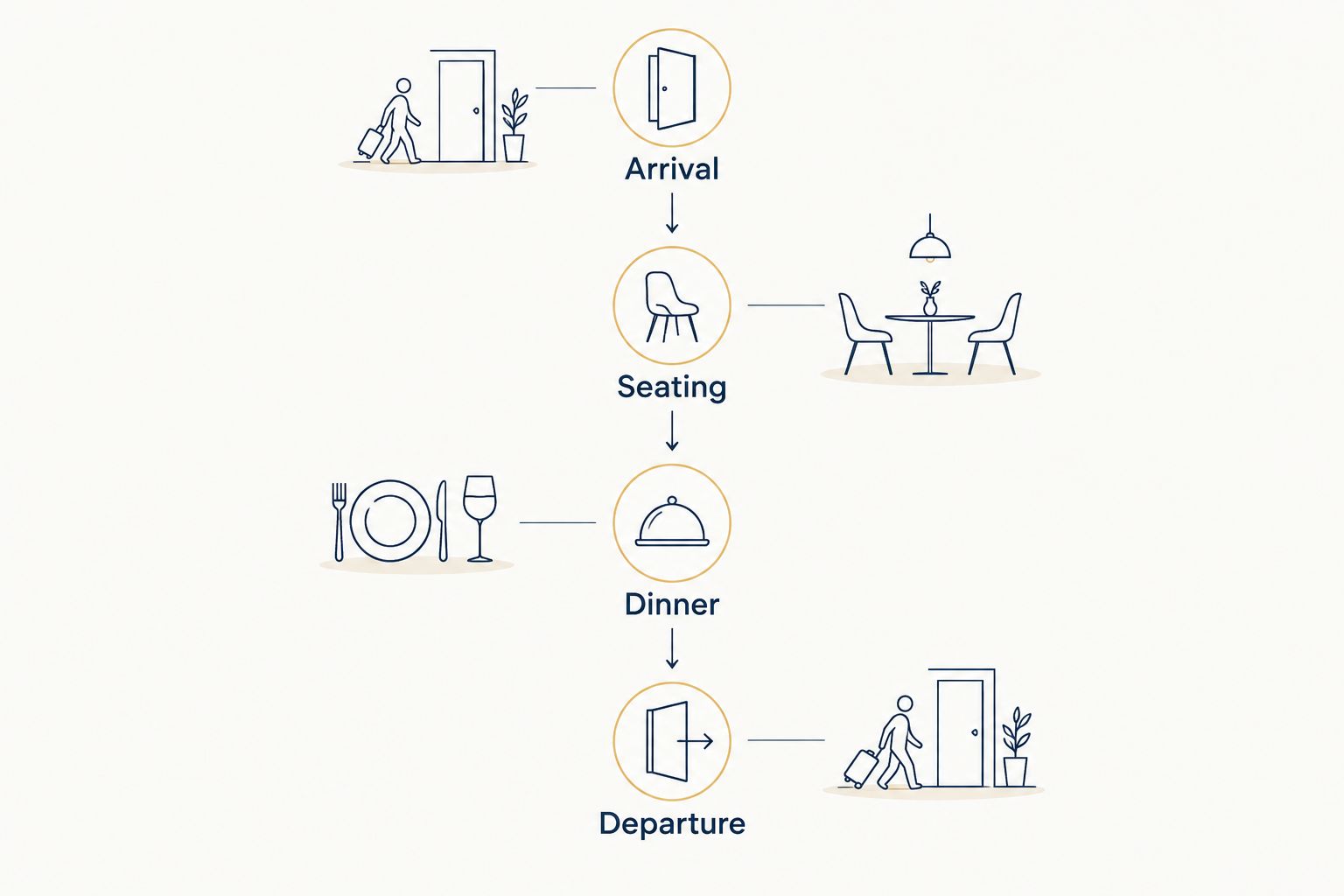
The schedule should also identify who can approve a change on the evening. Keep that responsibility with the coordinator rather than asking the couple to resolve every question during dinner.
- Confirm when guests should arrive and be seated.
- Agree how food service will begin.
- Place speeches or welcome remarks in the running order.
- Ask how late arrivals will be handled.
- Record the agreed finish and departure arrangements.
6. Resolve seating and hosting details
Sketch a seating plan using paper or a basic spreadsheet. Begin with relationships and conversation, then account for access needs, children and the people who will be introducing guests to one another.
Do not promise a particular table position, private room or exclusive area before it is agreed. Private event hosting describes a service; the exact room arrangement, sound arrangements and access boundaries still need to be established for your dinner.
A skyline setting adds atmosphere, but a view is not a seating plan. Ask how your proposed layout works for conversation and service, and distinguish any requested seating preference from the arrangement that has actually been confirmed.
- Identify guests who can help make introductions.
- Keep access requirements visible on the seating plan.
- Discuss whether the group will sit together or across tables.
- Confirm the boundaries of any private event arrangement.
- Ask how speeches and background sound will be managed.
- Name the person who will welcome guests.
7. Send one clear invitation
Write the guest message only after the main arrangements are settled. Keep it separate from the wedding invitation so nobody mistakes an optional gathering for the ceremony or assumes the same dress expectations apply.
Lead with the purpose of the evening, then give the information someone needs while travelling: date, arrival time, venue, floor, transport instructions and a contact. State what the hosts are arranging and what guests need to organise themselves.
Before sending, ask someone outside the planning group to read it. If that person cannot explain where to arrive and what happens next, simplify the message rather than adding another attachment.
- State whether the dinner is optional.
- Give a clear response deadline.
- Include the agreed dress guidance.
- Explain transport arrangements without assumptions.
- Provide a contact for dietary or access questions.
- Send one final version when arrangements change.
Compare formats for your wedding guests
Choose the format by its job in the itinerary, not by how elaborate it sounds. A welcome drinks gathering and a seated dinner solve different problems; neither automatically replaces the other.
| Option | Best for | Main advantage | Key limitation |
|---|---|---|---|
| Seated group dinner | Guests meeting over a shared meal | Gives the evening a defined centre and sequence | Needs coordinated seating and a clear approach to late arrivals |
| Welcome drinks gathering | Introductions before the wedding | Lets you focus on greeting guests and conversation | Does not replace dinner unless a meal is explicitly arranged |
| Brunch gathering | A daytime farewell | Creates a separate occasion before guests leave | Needs to fit checkout, transport and onward travel plans |
| Private event arrangement | Hosts needing a defined group setting | Creates a single brief for the restaurant and organisers | Layout, sound and privacy need explicit agreement |
Choose the simplest format that meets the guest brief. If the purpose is introducing families over dinner, adding another activity can distract from the conversation you wanted to create.
Common mistakes destination wedding hosts make
Treating every guest as a wedding-week attendee
An invitation to the wedding does not establish attendance at every surrounding event. For your 2026 guest list, collect a separate response for the dinner and distinguish confirmed guests from people still deciding their travel plans.
Choosing the view before checking the menu
A skyline draws attention; the meal still has to serve the group. With Nazcaa’s Nikkei fine dining, check that the proposed dishes and preparation methods suit your guests before making the setting the centre of your invitation.
Assuming private hosting means exclusive use
Ask what the proposed arrangement includes. Record the space, seating, sound expectations and any shared access in writing rather than treating the phrase private event as a complete specification.
Leaving practical instructions to the couple
Guests need a reachable coordinator, not another question for the couple during their wedding schedule. Share the contact and arrival details in advance, then keep last-minute updates in one agreed communication channel.
FAQ
What is the best format for a destination wedding dinner in Dubai?
A seated group dinner is best when the main purpose is bringing guests together over a meal. Choose welcome drinks for introductions or brunch for a daytime farewell, then match the format to your guests’ travel plans.
Is Nazcaa suitable for a destination wedding guest dinner?
Nazcaa suits guests seeking Japanese-Peruvian fine dining, cocktails and skyline views in Downtown Dubai. It offers private event hosting on Level 12 of Address Dubai Mall; discuss the menu and event arrangement against your specific guest brief.
Should every wedding guest be invited to the welcome dinner?
Define the invitation group before making arrangements, rather than assuming every wedding guest will attend. State clearly whether the dinner is for all invitees, close family or guests arriving on a particular day.
How do I plan dinner for guests staying at different Dubai hotels?
Group guests by hotel or pickup point and give each group clear arrival instructions. Separate shared transport from independent travel, and name one coordinator for questions on the evening.
What should I ask about dietary requirements?
Ask guests to report allergies, dietary preferences and other food restrictions separately. Share the details with the restaurant before agreeing on dishes, and confirm how each requirement will be handled.
Does private event hosting mean the whole restaurant is reserved?
Private event hosting does not by itself define exclusive use of the restaurant. Confirm the exact space, seating layout, shared access and sound arrangements in the written event agreement.
What should a Dubai wedding dinner invitation include in 2026?
Include the purpose, date, arrival time, venue name, floor, response deadline and host contact. Add the agreed dress guidance and transport instructions, and explain whether attendance is optional.
One last thing
Read the invitation as a guest who has just landed. A beautiful description of the evening cannot replace the correct entrance, floor and contact name.
Keep the atmosphere in the opening line and the practical details immediately beneath it. Twelve floors above the city should describe the experience—not leave anyone wondering how to reach it.


