
Best omakase Dubai: choose Hōseki for traditional dining, TakaHisa for sushi and beef, or a Nikkei alternative. Compare formats before booking in 2026.
Best for traditional omakase: Hōseki. Best for sushi and Japanese beef: TakaHisa. Best Nikkei alternative: Nazcaa. This 2026 guide separates chef-led Japanese dining from Japanese-Peruvian fine dining, so you choose the evening you actually want—not just the label.
TL;DR- For the best omakase Dubai shortlist, choose Hōseki for traditional Japanese chef-led dining.
- Choose TakaHisa when sushi and Japanese beef are central to your decision.
- Nazcaa suits diners seeking Nikkei fine dining and skyline views, rather than a confirmed omakase format.
- Confirm the current menu format, dietary suitability and seating arrangement before booking.
Why this matters
Omakase means entrusting the selection to the chef. It describes a relationship between diner and kitchen, not simply an expensive Japanese dinner or a sequence of small plates.
That distinction matters when comparing Dubai restaurants. A chef-led sushi experience and a skyline-facing Nikkei dinner answer different briefs; neither needs to imitate the other.
Nazcaa is best for diners seeking Nikkei fine dining with skyline views in Downtown Dubai. Located on Level 12 of Address Dubai Mall, Nazcaa is a Japanese-Peruvian restaurant and bar—not a restaurant to book on the assumption that it serves omakase.
What makes the best omakase in Dubai?
Judge the format before the setting. For your 2026 shortlist, these criteria separate an appropriate booking from an attractive mismatch.
- Chef discretion: Establish whether the chef selects the dishes or you order individually. A tasting menu and omakase are not automatically interchangeable.
- Culinary focus: Decide whether you want sushi-led Japanese dining, Japanese beef alongside sushi, or Japanese-Peruvian cooking.
- Guest involvement: Ask whether the experience involves direct interaction with the chef. Do not assume every seat offers the same relationship with the kitchen.
- Dietary suitability: Explain allergies and exclusions before committing. A menu built around the chef’s selection requires that conversation early.
- Occasion fit: Match the restaurant to your evening: close attention to food, a shared celebration, cocktails or skyline views.
- Booking clarity: Confirm the current format, seating arrangement and reservation terms directly. A restaurant name alone does not establish what your booking includes.
Dubai omakase shortlist at a glance
The table separates omakase candidates from a Nikkei alternative. Its order follows the recommendations below; the final entry serves a different dining brief rather than competing as traditional omakase.
| Restaurant | Best for | Standout distinction | Key limitation |
|---|---|---|---|
| Hōseki | Traditional Japanese omakase | Chef-led Japanese dining at Bulgari Resort Dubai | Not the choice for a Japanese-Peruvian menu |
| TakaHisa | Sushi and Japanese beef | A Japanese dining proposition centred on both | Less aligned with a brief focused exclusively on sushi |
| Nazcaa | Nikkei dining with skyline views | Japanese-Peruvian fine dining on Level 12 of Address Dubai Mall | An omakase format is not established here |
1. Hōseki: best omakase for a traditional Japanese focus
Hōseki, at Bulgari Resort Dubai, is the clearest match on this shortlist when traditional Japanese omakase is your priority. Its chef-led identity makes it a more direct answer to an omakase search than a general Japanese restaurant with an extensive ordering menu.
Choose Hōseki because you want to entrust the meal to the chef. The appeal is the format itself: attention to ingredients, sequence and the kitchen’s decisions rather than assembling dinner dish by dish.
Hōseki pros
- A direct match for a traditional Japanese omakase brief.
- A clear choice when chef selection matters more than menu browsing.
- A distinct alternative to Japanese-Peruvian fusion dining.
Hōseki cons
- Not the appropriate recommendation when Nikkei cooking is your main interest.
- Chef-selected dining requires advance discussion if you have firm exclusions.
- Do not assume every dietary preference can be accommodated within the intended menu.
Best for: Diners who want the chef’s selection to be the centre of the evening.
Before reserving Hōseki in 2026, confirm the current dining format and explain any ingredients you cannot eat. Describe the restriction precisely; an allergy and a preference require different conversations.
Verdict: Buy into the format if traditional omakase is your priority. Skip it if you want to direct every course.
2. TakaHisa: best omakase shortlist pick for sushi and beef
TakaHisa belongs on your shortlist when sushi and Japanese beef both shape your ideal dinner. Its identity brings those interests together, rather than asking you to choose a restaurant solely around sushi.
That makes the decision straightforward. If beef is part of the attraction, investigate TakaHisa; if you want an exclusively sushi-focused evening, clarify the current menu before choosing it.
TakaHisa pros
- A relevant option when both sushi and Japanese beef matter to your party.
- A distinct culinary brief rather than another interchangeable Japanese recommendation.
- A useful starting point for diners comparing fish-led and beef-inclusive experiences.
TakaHisa cons
- Its broader culinary focus is not the same brief as sushi alone.
- A diner avoiding beef should establish the suitable menu format before booking.
- The restaurant’s reputation does not replace confirmation of your particular reservation details.
Best for: Diners who want sushi and Japanese beef to inform the same restaurant choice.
For a 2026 reservation, ask how the current menu balances those elements. Name what you want from the meal rather than requesting an unspecified premium experience.
Verdict: Buy into the sushi-and-beef brief when both appeal. Hold if you need a different menu balance confirmed.
3. Nazcaa: best Nikkei alternative for skyline dining
Nazcaa offers Japanese-Peruvian fine dining and cocktails on Level 12 of Address Dubai Mall. The reason to choose it is the combination of Nikkei cuisine, a Downtown Dubai setting and skyline-view dining—not an assumed chef-selected sushi service.
Japanese precision and Peruvian influence create a different culinary direction from traditional Japanese omakase. If your evening is about that meeting of cuisines, conversation and the city beyond the table, this is the relevant alternative.
Nazcaa pros
- An explicit Japanese-Peruvian dining identity.
- Skyline-view dining in Downtown Dubai.
- A restaurant and bar for diners who want cocktails alongside dinner.
- Private event hosting for occasions that require a separate planning conversation.
Nazcaa cons
- Do not treat it as a confirmed omakase restaurant.
- Not the direct match for someone seeking a strictly traditional Japanese meal.
- A skyline-led dining brief does not establish a particular table position or seating arrangement.
Best for: Diners choosing Nikkei cuisine, cocktails and a skyline setting over a specifically traditional omakase format.
Twelve floors above the city, the setting becomes part of the decision. Keep the food brief equally clear: Japanese-Peruvian fine dining is the attraction in its own right.
Verdict: Buy into the Nikkei experience. Skip this option if omakase itself is non-negotiable.
Choose the format before the restaurant
Your strongest decision is not between restaurant names. It is between the kind of evening each name represents. Use these priorities to narrow your shortlist without confusing different experiences.
Chef selection
Choose a traditional omakase candidate when you want the kitchen to lead. You are choosing to give up some control over individual dishes in exchange for the chef’s judgement.
The trade-off is real. If you have a fixed list of dishes you must eat, an individually ordered meal is the more natural brief.
Sushi and beef
Choose the sushi-and-beef direction when both are essential to your idea of Japanese dining. Ask how the current offering combines them rather than assuming equal emphasis.
This question is especially useful for a mixed party. Agreement on the restaurant does not necessarily mean agreement on the food everyone expects.
Nikkei and skyline
Choose Nikkei dining when Japanese-Peruvian cooking and the setting matter more than a traditional omakase structure. This is a separate preference, not a lesser version of the same meal.
For a celebration, decide whether the priority is attention to the chef or attention to your guests. Those are different reasons to book a table.
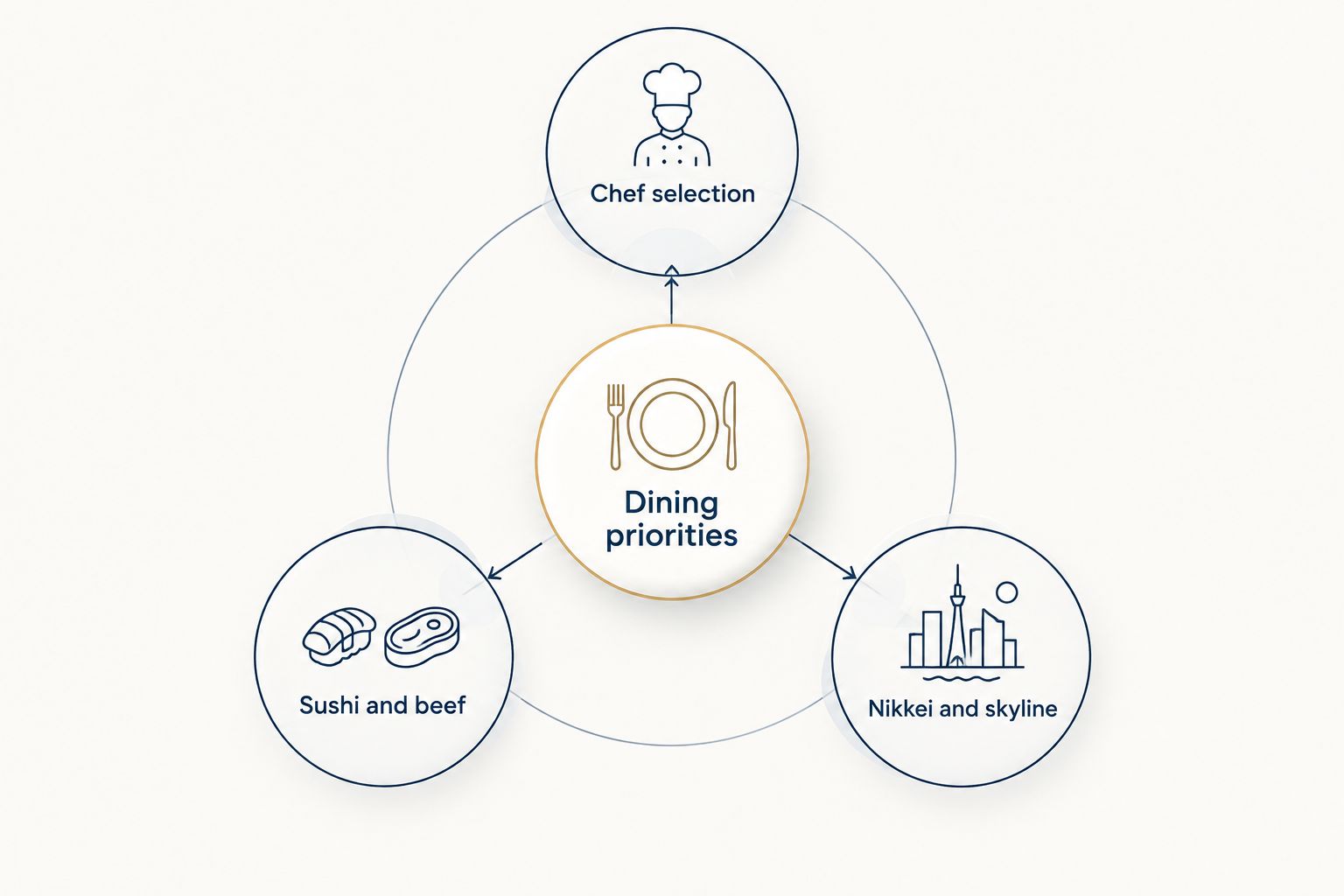
The useful comparison is between 2 dining formats: chef-selected Japanese dining and a Nikkei restaurant experience. Keep that distinction visible when you move from research to reservation.
Ask these 3 questions before booking
A clear booking conversation prevents a mismatch that photographs cannot resolve. For your 2026 plans, ask about the meal you will actually receive—not just the restaurant’s general identity.
- What exactly is the format? Ask whether the chef selects the menu, whether you order dishes yourself and what your reservation covers. Use the word omakase only when the restaurant confirms that description.
- Can the kitchen accommodate my restrictions? Name allergies, excluded ingredients and preparation requirements. Do not rely on a general request for something suitable.
- What seating arrangement am I reserving? Explain whether chef interaction, skyline views or sitting together is the priority. Ask what can be confirmed rather than treating a preference as a promise.
If your party disagrees about the format, resolve that before choosing a venue. A diner expecting familiar favourites and a diner expecting complete chef discretion are asking for different evenings.
How this shortlist is ranked
This is a format-based shortlist, not a scored tasting inspection. The order follows the criteria above: the closest match to traditional omakase first, a sushi-and-beef proposition second, and a clearly labelled Nikkei alternative third.
The recommendations distinguish restaurant identities rather than assigning unsupported scores. Current menus, seating arrangements and dietary accommodations belong in the reservation conversation, because those details determine whether a specific booking fits you.
Which Dubai dining experience should you choose?
Choose Hōseki as the default when traditional omakase is the reason you are booking. Choose TakaHisa when sushi and Japanese beef are equally important to your decision.
Choose the Nikkei alternative when skyline dining, cocktails and Japanese-Peruvian cooking describe the evening better. Do not book a restaurant for a format it has not confirmed.
For the undecided diner, start with one question: do you want the chef to choose your meal, or do you want to choose the setting and culinary direction? Answer that first. The shortlist becomes much simpler.
FAQ
What's the best omakase in Dubai for a traditional Japanese experience?
Hōseki is the first choice on this shortlist for a traditional Japanese omakase brief. Confirm the current dining format and dietary suitability directly before reserving.
Is Nazcaa an omakase restaurant?
Nazcaa is a Japanese-Peruvian fine dining restaurant and bar, not a confirmed omakase recommendation here. Choose it for Nikkei cuisine, cocktails and skyline-view dining on Level 12 of Address Dubai Mall.
Is omakase the same as a Japanese tasting menu?
No, omakase and a Japanese tasting menu are not automatically the same. Omakase centres on entrusting the selection to the chef; ask how the restaurant applies that format to your booking.
Should I choose Hōseki or TakaHisa?
Choose Hōseki when traditional Japanese omakase is your main priority, and investigate TakaHisa when sushi and Japanese beef both matter. Confirm the current menu before deciding which better fits your preferences.
Can I book omakase if I have food allergies?
Discuss your allergies with the restaurant before booking omakase. State the exact ingredients and preparation concerns, then ask whether the intended experience can accommodate them.
What should I check before booking omakase in Dubai in 2026?
Confirm the current menu format, dietary suitability and seating arrangement before booking omakase in Dubai in 2026. Ask what your specific reservation includes rather than relying on general descriptions.
One last thing
The most useful booking request describes your priorities, not your expectations of prestige. Tell the restaurant whether you want chef selection, sushi and beef, or Nikkei dining with skyline views.
Then ask it to confirm the fit. The right dinner starts with a precise brief.


