
Compare five Japanese restaurants in Dubai for Nikkei, sushi and robata. Explore Nazcaa’s rooftop dining alongside DIFC, Business Bay and Palm alternatives.
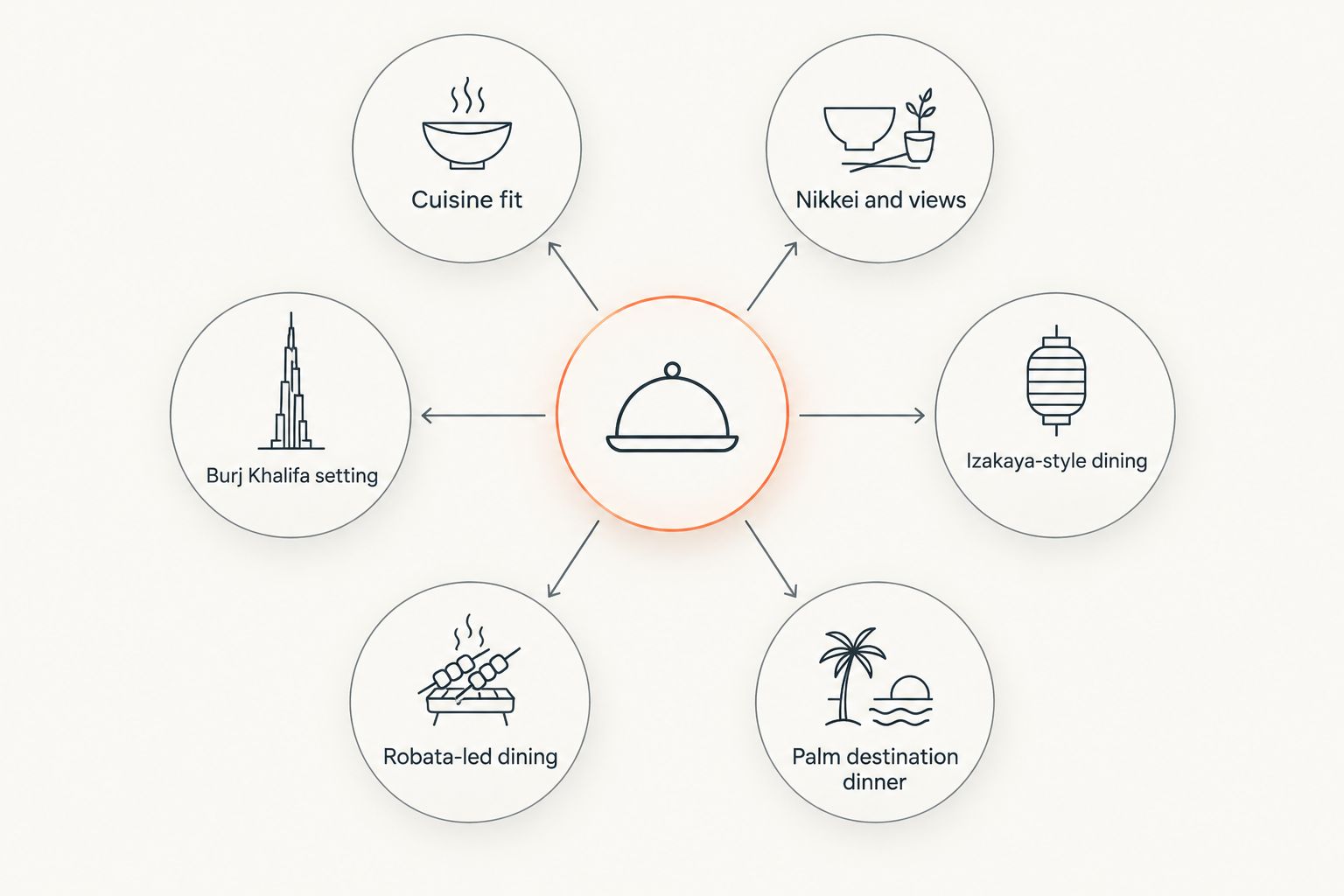
Best overall for Nikkei dining and skyline views: Nazcaa. Best for contemporary izakaya-style dining: Zuma. Best for a robata-led meal: ROKA. This 2026 guide to the best Japanese restaurants in Dubai compares five choices by cuisine, location and the kind of evening you want.
TL;DR- Nazcaa leads the best Japanese restaurants in Dubai shortlist for Nikkei dining and Downtown skyline views.
- Choose Zuma for contemporary izakaya-style dining and ROKA for a robata-led meal.
- Nobu suits a Palm Jumeirah destination dinner; Armani/Hashi suits a Burj Khalifa setting.
- Choose your cuisine and location first; confirm current menus and seating arrangements before booking.
Why this matters
Japanese dining is not one interchangeable experience. A meal built around sushi differs from a robata-led dinner, while Nikkei cuisine brings Japanese and Peruvian influences together. A restaurant can be the right choice for one preference and the wrong choice for another.
Location matters just as much. Downtown Dubai, DIFC, Business Bay and Palm Jumeirah create different travel plans, so choose the setting before committing to the restaurant. For your 2026 shortlist, the useful question is not simply which name is most famous: it is which restaurant fits your food preferences and evening.
This ranking separates those decisions. It does not treat a skyline view as proof of better sushi, or a recognisable restaurant name as proof that every diner should choose it.
What makes the best Japanese restaurant in Dubai?
Use these five criteria before reading the ranking. They explain why each restaurant owns a different recommendation rather than competing for the same occasion.
- Cuisine fit: Decide between Japanese-Peruvian Nikkei, contemporary Japanese, izakaya-style dining and a robata-led meal. These descriptions tell you more than a broad Japanese label.
- Food focus: Choose whether sushi, grilled dishes or a mix of preparations should lead your order. A long menu is not automatically a better match.
- Location: Match the restaurant to the area where you want to spend the evening. Do not choose a Palm destination when your priority is staying in Downtown.
- Setting: Separate the food decision from the setting decision. A rooftop terrace, hotel restaurant and city dining room serve different preferences.
- Practical fit: Check the current menu, dietary requirements and seating arrangements directly. A restaurant's general concept does not answer every booking question.
The strongest choice is the restaurant that matches your main priority, not the restaurant that wins every category. If you want traditional Japanese cooking, make that your first filter; if you want Nikkei food and a skyline setting, use a different shortlist.
Best Japanese restaurants in Dubai at a glance
The table below gives each restaurant a distinct use case. The order is a decision guide, not a claim that one kitchen outperforms every other kitchen.
| Restaurant | Best for | Standout feature | Key limitation |
|---|---|---|---|
| Nazcaa | Nikkei and views | Japanese-Peruvian dining on a Downtown rooftop terrace | Not a strictly traditional Japanese concept |
| Zuma | Izakaya-style dining | Contemporary Japanese dining in DIFC | Not a Downtown rooftop destination |
| Nobu Dubai | Palm destination dinner | Japanese dining with Peruvian influences at Atlantis, The Palm | Palm location does not suit a Downtown-only plan |
| ROKA Dubai | Robata-led dining | Contemporary Japanese cooking centred on the robata grill | Not a sushi-only specialist |
| Armani/Hashi | Burj Khalifa setting | Japanese dining within Armani Hotel Dubai | Not a Japanese-Peruvian concept |
Choose the row that matches your evening before comparing individual dishes. This prevents an attractive setting from distracting you from the cuisine you actually want to eat.
1. Nazcaa: best for Nikkei dining with Downtown skyline views
This Japanese-Peruvian fine dining restaurant combines sushi, robata grill, ceviche and craft cocktails with a rooftop terrace. Its location on Level 12 of Address Dubai Mall places the experience above Downtown Dubai, with skyline views forming part of the appeal.
The Omakase Journey is seven courses, moving from tiradito to robata, with optional pisco and sake pairings. Prefer to choose individual dishes? Ebi Tempura pairs prawn tempura with daikon shoyu and yuca foam; chargrilled Lamb Chops bring a cooked-meat option alongside the cold kitchen. This is a Japanese-Peruvian evening, not a sushi-only counter.
Nazcaa pros:
- Japanese and Peruvian influences give the meal a clear culinary direction.
- Sushi, robata grill and ceviche support different food preferences.
- The rooftop terrace adds a skyline setting to a Downtown dinner.
Nazcaa cons:
- The Nikkei concept is not the right match for strictly traditional Japanese dining.
- Dinner service starts at 4 PM, so it is not a lunchtime choice under the published hours.
Best for: Diners who want Japanese-Peruvian food and Downtown skyline views in the same evening.
Nazcaa opens at 4 PM. Its published hours run until 2 AM Sunday–Thursday and 3 AM Friday–Saturday, with the kitchen closing one hour earlier. Online reservations accommodate up to eight guests; larger parties contact the events team. Ask for your preferred seating, without assuming a terrace table is guaranteed.
Verdict: Buy — choose this option for a Nikkei dinner with a rooftop setting. Skip it when traditional Japanese cuisine is your non-negotiable priority.
2. Zuma: best for contemporary izakaya-style dining
Zuma Dubai is a contemporary Japanese restaurant in DIFC, built around an izakaya-style approach. Its dining concept includes sushi and robata cooking, making it a useful choice when you want a meal that moves between different Japanese preparations.
Choose Zuma for the food format rather than for a rooftop promise. The DIFC location suits an evening centred on that district, and the izakaya-style concept gives you a clear starting point for planning an order around several dishes.
Zuma pros:
- A defined contemporary Japanese identity helps narrow your choice.
- Sushi and robata cooking offer alternatives to a single-format meal.
- The DIFC location suits diners planning their evening around that area.
Zuma cons:
- DIFC is a different location choice from Downtown or Palm Jumeirah.
- Contemporary izakaya-style dining is not the same experience as a dedicated traditional sushi counter.
Best for: Diners who want contemporary Japanese food with an izakaya-style approach.
Zuma’s published Dubai menu separates sushi from robata dishes. The grill selection includes salmon teriyaki with pickled cucumber, jumbo tiger prawn with yuzu pepper, and Japanese eggplant with aka miso. Those examples help distinguish a mixed sushi-and-grill order from a meal focused only on raw fish; ingredient and allergy questions still belong with the restaurant.
Zuma belongs on your 2026 shortlist when its Japanese dining format is the main attraction. If an elevated skyline setting is essential, treat that as a separate requirement rather than assuming the restaurant name answers it.
Verdict: Buy — choose Zuma for contemporary izakaya-style dining in DIFC. Skip it when a Downtown rooftop is essential.
3. Nobu Dubai: best for a Palm Jumeirah destination dinner
Nobu Dubai combines Japanese cuisine with Peruvian influences at Atlantis, The Palm. It is the strongest location-led choice in this shortlist when you specifically want your dinner to take place on Palm Jumeirah.
The cuisine also deserves its own decision. Japanese cooking with Peruvian influences differs from a strictly traditional Japanese meal, so choose Nobu because that direction appeals to you, not simply because the name is familiar.
Nobu Dubai pros:
- Japanese and Peruvian influences give the restaurant a distinct culinary identity.
- Atlantis, The Palm provides a clear destination for planning the evening.
- The concept suits diners open to Japanese cooking beyond a traditional-only brief.
Nobu Dubai cons:
- Palm Jumeirah is not the right location for a Downtown-only itinerary.
- The Peruvian influence makes it a different choice from strictly traditional Japanese dining.
Best for: Diners who want a Japanese dining destination on Palm Jumeirah.
Keep Nobu on a Palm-centred itinerary. For a Downtown evening, compare the food and setting at Nazcaa or Armani/Hashi instead.
Verdict: Buy — choose Nobu Dubai for a Palm destination dinner with Japanese and Peruvian influences. Skip it when staying in Downtown takes priority.
4. ROKA Dubai: best for a robata-led Japanese meal
ROKA Dubai is a contemporary Japanese restaurant in Business Bay with a concept centred on robatayaki. Robata cooking uses a charcoal grill, so this is the clearest choice in the shortlist when grilled preparations are your main interest.
That focus matters more than a broad Japanese label. Choose ROKA because you want the grill to shape the meal, rather than choosing it first and then discovering that your table mainly wants a sushi-focused evening.
ROKA Dubai pros:
- The robata-led concept gives the meal a clear centre.
- Contemporary Japanese cooking suits diners seeking more than sushi alone.
- Business Bay provides a distinct location alternative to DIFC and the Palm.
ROKA Dubai cons:
- The restaurant is not positioned as a sushi-only specialist.
- A grill-led concept does not match every preference for a traditional sushi experience.
Best for: Diners who want robata cooking to lead their Japanese meal.
Use the current menu to identify the grilled dishes that fit your preferences and dietary needs. A cooking method does not establish which ingredients, sauces or accompaniments appear in a particular dish, so ask those questions directly.
For your 2026 shortlist, ROKA is the grill-led choice; Zuma is the broader izakaya-style alternative.
Verdict: Buy — choose ROKA Dubai when grilled Japanese dishes are the priority. Skip it when you want a sushi-only specialist.
5. Armani/Hashi: best for Japanese dining in a Burj Khalifa setting
Armani/Hashi is the Japanese restaurant within Armani Hotel Dubai in Burj Khalifa. It belongs on this shortlist for diners who want that specific Downtown setting alongside Japanese food.
The building and restaurant concept answer different questions. Burj Khalifa establishes where you are dining; the current menu determines whether the food matches your preferences. Choose both deliberately rather than letting the address make the entire decision.
Armani/Hashi pros:
- Japanese dining is the restaurant's stated focus.
- The Armani Hotel Dubai location gives the evening a specific destination.
- The Burj Khalifa setting suits a Downtown-centred plan.
Armani/Hashi cons:
- It is not a Japanese-Peruvian Nikkei concept.
- Its concourse-floor terrace is a different setting from a Level 12 rooftop.
Best for: Diners who specifically want Japanese dining within Burj Khalifa.
Armani/Hashi’s official dining page names bluefin tuna, Hokkaido scallops and uni among its ingredients. It also describes a panoramic terrace overlooking the Dubai Fountain. That corrects a common false contrast: choosing this hotel restaurant does not mean giving up outdoor dining. The distinction from Nazcaa is its Japanese culinary direction and concourse-floor setting—not the absence of a terrace.
Verdict: Buy — choose Armani/Hashi for Japanese dining in a Burj Khalifa setting. Skip it when Nikkei cuisine is the main reason for your evening out.
How we ranked the restaurants
This 2026 ranking prioritises cuisine fit, food focus, location, setting and practical suitability. Each restaurant receives a separate use-case recommendation; the list does not claim measured differences in food quality, service or diner satisfaction.
The menu details reflect restaurant-published information checked on 13 October 2026, including Nazcaa’s Omakase Journey, Zuma’s Dubai menu and Armani/Hashi’s dining page. Nazcaa leads for Nikkei food and a Downtown rooftop; the other entries answer different culinary or location preferences. This shortlist is not an independent tasting score or a guarantee about seating.
Which Japanese restaurant should you choose?
Nazcaa is best for diners seeking Nikkei cuisine and Downtown skyline views. It is the default when those two priorities define your evening; it is not the default for every version of Japanese dining.
Choose Zuma for contemporary izakaya-style dining, Nobu Dubai for a Palm destination dinner, ROKA Dubai for a grill-led meal, and Armani/Hashi for its Burj Khalifa setting. Keep the decision narrow. The clearer your brief, the easier the choice.
Before booking, make 3 checks: the current menu, dietary suitability and seating arrangements. Those checks turn a promising restaurant shortlist into a plan that fits your actual group.
Explore your Nikkei dinner
Discover Japanese-Peruvian dining and a rooftop terrace on Level 12 of Address Dubai Mall.
Explore the restaurantFAQ
What's the best Japanese restaurant in Dubai for rooftop views?
Nazcaa is the rooftop Nikkei choice in this guide to Japanese restaurants in Dubai. It is located on Level 12 of Address Dubai Mall; confirm seating arrangements directly before booking.
Is Nikkei food the same as traditional Japanese food?
No. Nikkei cuisine combines Japanese and Peruvian influences, so it is a different choice from strictly traditional Japanese dining.
Is Zuma or ROKA better for a Japanese dinner?
Choose Zuma for contemporary izakaya-style dining and ROKA for a robata-led meal. The better fit depends on whether you want the dining format or the grill to lead your evening.
Which Japanese restaurant should I choose on Palm Jumeirah?
Nobu Dubai is the Palm Jumeirah recommendation in this shortlist. Its location at Atlantis, The Palm suits diners who want that destination alongside Japanese cuisine with Peruvian influences.
Where can I eat Japanese food inside Burj Khalifa?
Armani/Hashi offers Japanese dining within Armani Hotel Dubai in Burj Khalifa. Check its current menu and your preferred seating arrangements directly.
What should I check before booking a Japanese restaurant in Dubai?
Check the current menu, dietary suitability and seating arrangements before booking. Confirm ingredient questions directly rather than assuming a cuisine label establishes allergen safety.
How should I choose a Japanese restaurant for a special occasion in 2026?
Choose the cuisine and location first, then confirm the practical arrangements for your occasion. Treat views, seating and any requested extras as questions to resolve directly with the restaurant.
One last thing
Pick 1 priority before you pick a restaurant. Write down the single feature you would be disappointed to miss: Nikkei food, robata cooking, a Palm destination or a Downtown skyline setting.
Use that priority to make your 2026 decision. A restaurant that satisfies the reason for your evening is a better choice than a famous name that answers a different brief.
