
Conference dining Dubai: choose the setting around your guests and schedule. Plan arrivals, dietary requests and a Downtown dinner that fits your evening.
Conference attendees’ dining in Dubai is the planning of an evening meal around event schedules, with the aim of making room for business conversation and downtime. For your 2026 visit, start with the final session, your guests’ needs and the journey back—not simply the restaurant view.
TL;DR- For conference dining Dubai planning, confirm the evening’s purpose before choosing a restaurant or bar.
- Nazcaa is best for conference attendees seeking Nikkei fine dining and skyline views in Downtown Dubai.
- Separate restaurant preferences from confirmed arrangements: seating, dietary requests and group details need direct agreement.
- Choose one coordinator and give delegates a single, clear arrival plan.
Why dining matters for conference attendees
Your conference programme sets the boundaries of the evening. A hosted client dinner needs a different brief from a relaxed meal with colleagues: the first centres on conversation, while the second can leave more room for exploring the city.
Choose the purpose before the setting. A skyline becomes part of the occasion, but it cannot resolve a late arrival, an unsuitable table arrangement or an uncommunicated dietary requirement.
For a destination-led evening, Nazcaa serves Japanese-Peruvian fine dining on Level 12 of Address Dubai Mall. Its Downtown Dubai location, cocktails and private event hosting give you a starting point for an enquiry, not a substitute for confirming your group’s arrangements.
Build your 2026 dinner around three priorities: a realistic arrival, a meal that suits the guests and a clear finish. Keep those priorities visible when comparing settings.
How to plan your conference dinner in Dubai
1. Define the evening’s purpose
Write a one-sentence brief before circulating restaurant suggestions. Specify whether the evening is for a client relationship, a team gathering, an informal introduction or a celebration after the conference closes.
That brief becomes your filter. For a client conversation, ask about the proposed table setting and sound environment. For colleagues spending their first evening together, give the group enough information to decide whether the cuisine and atmosphere suit them.
Best for hosted business dinners: prioritise conversation over a packed itinerary. Avoid attaching a reception, destination dinner and separate drinks stop to the same evening unless each serves a clear purpose. Every additional move creates another handover for the organiser.
- Write the dinner’s purpose in the invitation.
- Identify the host and the guests who need introductions.
- Decide whether drinks are part of dinner or a separate gathering.
- Agree on a finishing point before adding another venue.
2. Build the evening around the conference schedule
Start with the published programme and check whether your guests have commitments after the final session. Do not treat the session’s finish as the restaurant arrival time: delegates still need to leave the venue, collect belongings and make the journey.
Use your map application to assess the route from the actual departure point. Recheck it on the day rather than turning an early estimate into a promise. The relevant journey is conference venue to restaurant, not hotel to restaurant unless guests are returning to change.
For a 2026 conference invitation, keep the schedule practical rather than minute-by-minute. Record the departure plan, dinner arrival and intended finish, then identify which details still need confirmation.
- Check the final session and any hosted reception.
- Choose between direct travel and a hotel stop.
- Confirm the restaurant’s entrance and arrival instructions.
- Give late arrivals a named person to contact.
3. Match the cuisine to your guests
Read the current menu before recommending a restaurant. A cuisine label helps introduce the meal, but your decision also needs to account for dietary requirements, preferences and how much explanation your guests want at the table.
Nikkei cuisine brings Japanese and Peruvian influences together. Nazcaa offers this style of fine dining alongside cocktails and skyline-view dining. Best for delegates seeking a destination dinner: consider the cuisine and setting together, then check the practical fit.
Ask guests privately about allergies and dietary requirements before sending the final brief. Pass those requirements to the restaurant and request confirmation; do not infer suitability from a dish name or assume that an ingredient can be removed safely.
Keep the invitation descriptive. Explain the cuisine in plain language rather than promising particular dishes, preparations or substitutions before they have been agreed.
- Review the current menu rather than an old screenshot.
- Collect dietary requirements before confirming arrangements.
- Ask the restaurant to confirm how it can address those requirements.
- Share a short cuisine description with delegates.
4. Confirm the table experience
A restaurant’s overall atmosphere does not tell you everything about the table proposed for your dinner. Ask where the group would sit and explain whether you need sustained business conversation, an informal social meal or a hosted celebration.
For skyline dining, distinguish the venue’s location from the seating arrangement. A restaurant with views does not establish what every guest will see from every seat. Request the setting you want, then record what the restaurant actually confirms.
For a 2026 business dinner, make this distinction explicit in the invitation: describe confirmed arrangements, not preferred ones. That keeps an attractive evening from becoming a promise the host cannot control.
If you are discussing private event hosting, ask what arrangement fits your brief. Do not equate an event enquiry with a confirmed private room, exclusive space or particular layout.
- Explain whether conversation or celebration comes first.
- Ask about the proposed seating arrangement.
- Separate a view request from a confirmed table detail.
- Confirm any presentation, speech or hosting requirements directly.
5. Give the group one clear arrival plan
Use an email, calendar invitation or shared message to keep the essential details together. Best for small groups: one coordinator and one current version of the plan. Multiple message threads make it harder to distinguish a suggestion from a decision.
Include the restaurant name, building, floor, agreed arrival and host contact. For this venue, the useful location detail is Level 12 of Address Dubai Mall; avoid shortening the destination to Dubai Mall alone.
If delegates are arriving from different commitments, organise 2 arrival groups: those travelling together and those making their own way. This is a planning choice, not a requirement. Both groups should receive the same destination details and instructions for contacting the host.
Keep sensitive information separate. A group invitation needs the meeting plan, not another guest’s allergy details or personal contact information without permission.
- Assign 1 coordinator to communicate changes.
- Send the full building and floor information.
- Distinguish shared travel from independent arrivals.
- Keep dietary information out of the general invitation.
6. Separate the enquiry from the confirmed plan
A useful enquiry is concise and specific. State the occasion, proposed date, expected group size, intended arrival, dietary requirements and the setting you are seeking. Ask the restaurant to respond to the points that determine your decision.
Read that response against your original brief. An acknowledgement is not confirmation of every requested detail. Keep a written record of the arrangements that have been agreed and resolve unanswered questions before sending guests the final invitation.
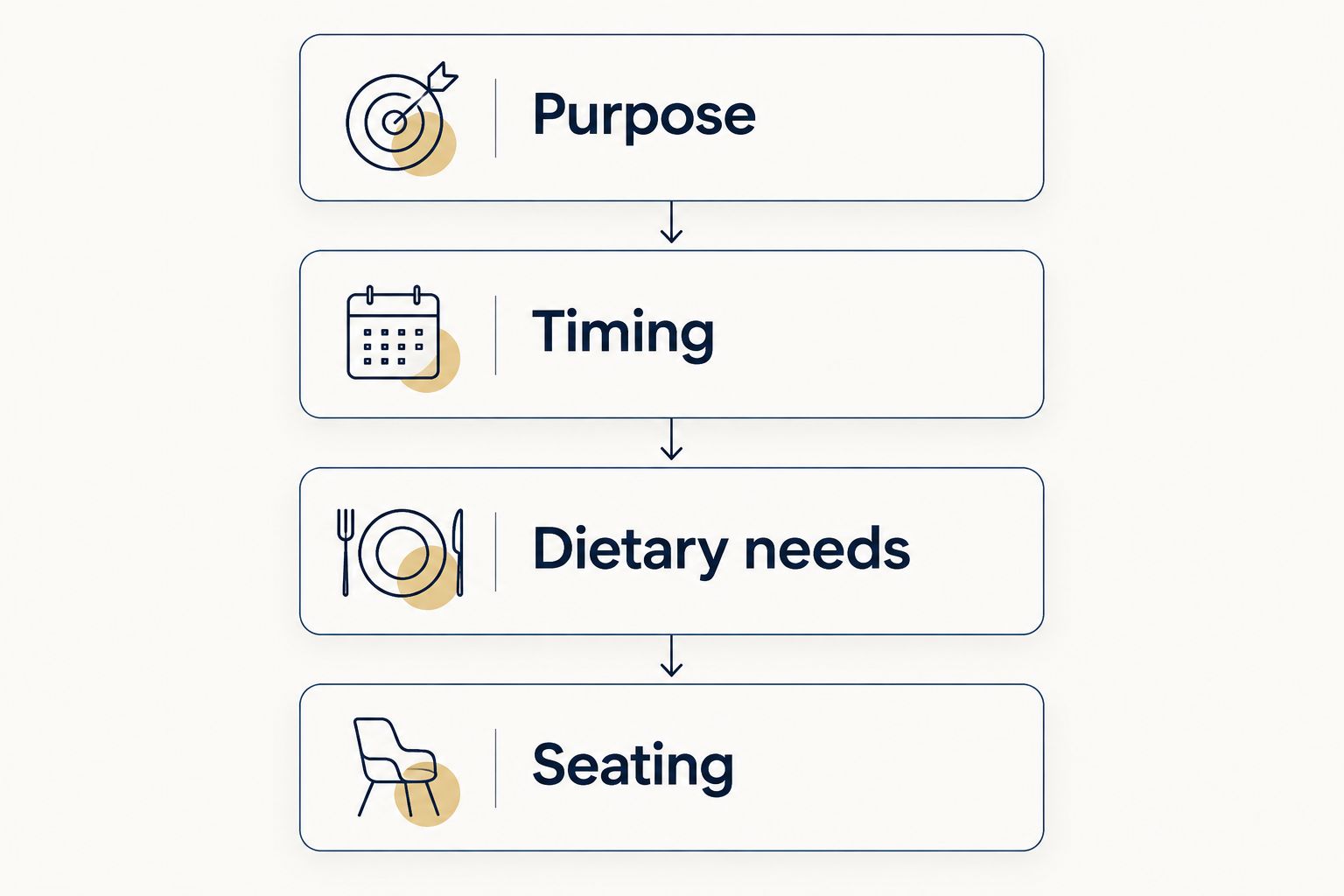
For conference dining in Dubai in 2026, build your confirmation around four headings: Purpose, Timing, Dietary needs and Seating. They keep the discussion focused without turning the booking into a long proposal.
- State the expected group size and occasion.
- List requests separately from essential requirements.
- Check each essential requirement against the response.
- Send delegates only the confirmed plan.
7. Prepare for changes without overplanning
Decide how you will handle a delayed session, a guest withdrawing or an arrival split across the evening. You do not need a second full itinerary. You need a clear person to contact and a way to communicate changes to the restaurant and delegates.
Avoid making last-minute assumptions about a larger group or a later arrival. Contact the restaurant, explain the change and ask what can be accommodated. Then update guests with the agreed arrangement rather than an unconfirmed workaround.
After the meal, keep any follow-up appropriate to the occasion. A client dinner can end with a short thank-you and the business next step; a team evening does not need to become another conference session.
- Identify who will contact the restaurant if plans change.
- Communicate revised guest numbers directly.
- Update the group through the original invitation channel.
- Keep the evening’s close aligned with its purpose.
Compare dining formats for your conference evening
Compare formats before comparing individual venues. Each solves a different planning problem, and each introduces a limitation you should address before inviting guests.
| Option | Best for | Main advantage | Key limitation |
|---|---|---|---|
| Dinner at your conference hotel | Delegates prioritising fewer separate journeys | Keeps the evening tied to the conference base | You still need to assess the actual restaurant and table setting |
| Destination fine dining | Client hosting or a deliberate change of scene | Makes the meal a distinct part of the visit | Requires a separate arrival and return plan |
| Private event hosting | Organisers seeking an agreed group format | Gives you a specific hosting brief to discuss | Privacy, layout and service arrangements require confirmation |
| Cocktail-led gathering | Informal introductions before or after another commitment | Keeps the focus on a social gathering | Does not replace a planned meal for guests expecting dinner |
Nazcaa is best for conference attendees seeking Nikkei fine dining and skyline views in Downtown Dubai. The trade-off is logistical: a destination dinner needs its own travel plan, and suitability for business conversation depends on the agreed setting rather than the view alone.
Plan your Downtown Dubai dinner
Explore Nikkei dining on Level 12 of Address Dubai Mall before making your group enquiry.
Explore the restaurantCommon mistakes conference attendees make
Treating the final session as dinner arrival
The programme finish and restaurant arrival are separate events. Build the journey into the plan, including any hotel stop, and avoid asking guests to meet at a time that assumes they can leave the conference instantly.
Choosing the view before the conversation
A skyline is a reason to choose a destination, not evidence that the proposed table suits a sensitive discussion. Explain your hosting needs directly and confirm the setting before presenting the evening as a business dinner.
Leaving dietary questions until the table
Collect requirements before the booking is settled. An organiser should communicate the guest’s stated needs accurately, not interpret an allergy, promise a substitution or make a safety judgement from the menu.
Turning preferences into promises
A requested view, layout or group arrangement belongs in the enquiry until the restaurant confirms it. Keep your guest invitation precise: the host should not promise more than the agreed plan contains.
FAQ
What’s the best way to plan conference dining in Dubai?
Start with the dinner’s purpose, the conference finish and your guests’ requirements. Then choose a restaurant, confirm the setting and send one clear arrival plan.
Where is Nazcaa for a dinner after a Dubai conference?
Nazcaa is on Level 12 of Address Dubai Mall in Downtown Dubai. Use the full building and floor details in your dinner invitation, and check the route from your conference venue.
Is a hotel dinner better than a destination restaurant?
A hotel dinner is better when your priority is limiting separate journeys; a destination restaurant is better when you want the meal to be a distinct occasion. Compare the actual dining setting and guest requirements before deciding.
How do I choose a restaurant for a client conversation?
Ask about the proposed seating and sound environment, then explain the purpose of the dinner. A restaurant’s cuisine and view do not establish whether a particular table suits your discussion.
What should I include in a conference dinner enquiry?
Include the occasion, proposed date, expected group size, intended arrival and dietary requirements. Separate essential requirements from preferences so the restaurant can respond clearly.
Can I arrange private event hosting for conference guests?
Private event hosting is an option to discuss directly with the restaurant. Confirm the proposed space, layout and arrangements rather than assuming that an enquiry establishes privacy or exclusive use.
What should I do if the conference runs late?
Contact the restaurant and explain the revised arrival before updating guests. Share the arrangement the restaurant agrees to, rather than assuming the original plan can shift unchanged.
One last thing
Write the return plan before sending the invitation. For your 2026 conference evening, a clear departure matters just as much as an elegant arrival—especially when guests have different hotels or another conference day ahead.
Let the skyline frame the evening, not dictate it. Choose the meal around the people at the table.


